
The Summer of the Analog Adult

Reclaiming summer
It happens around the same time every year. The school year wraps up, the schedules clear out, and within forty-eight hours of the initial excitement wearing off, it happens. A child walks into the kitchen, slumps against the counter, and delivers that familiar, inevitable summer refrain: I’m boooored.
As modern parents, our instinct is to immediately jump into fix-it mode. We scramble for the iPad, we rattle off a list of expensive camps, or we guiltily surrender to a movie marathon just to buy an hour of peace. In past years, we’ve talked extensively in this space about the superpower of childhood boredom and how a bucket of stones and a cardboard box can fuel a child’s imagination for hours.
But this year, let’s turn the lens around.
If we want our children to step away from the hyper-stimulating, algorithm-driven virtual world and embrace the messy, slow, wonderful real world, we have to ask ourselves a vulnerable question: What does our own relationship with reality look like?
Welcome to the summer of the Analog Adult.
The paradox of the vibrating wrist
It is a beautiful irony of 21st-century parenting that we can passionately lecture a child about the dangers of TikTok screen addiction while simultaneously checking a work email on our smartwatch, replying to a text on our phone, and half-watching a recipe video on the kitchen tablet.
Children are world-class anthropologists. They don't just listen to what we say; they meticulously study how we live. If they look up from their LEGO bricks and consistently see the top of our heads bent over glowing rectangles, the unspoken message is clear: the real action is happening online, not right here in front of us.
This isn’t about parental guilt. It’s about a family ecosystem. If we treat screens like a childhood vice to be policed rather than a family habit to be modelled, we create a dynamic of friction and resentment. To foster the independent, inquiry-driven, self-reliant minds we celebrate at Walden, we have to show them that the offline world is a place where adults actually want to hang out.
Trading scrolls for space
So, how do we transition from digital enforcers to analog role models? We start small, and we make it a bit of a game.
This summer, try introducing the Family Analog Hour.
Pick a window of time, perhaps late afternoon when the day is winding down and establish a sacred house rule: everyone’s devices go into a designated drawer, completely out of sight and out of mind. Yes, even yours. No "just checking this real quick" for Mom, no smartwatches vibrating for Dad.
The first fifteen minutes will likely feel excruciating. You will experience phantom vibration syndrome. Your brain will scream for a quick hit of dopamine. Your kids will stare at you like you’ve cancelled Christmas.
But then, the magic happens.
Because human beings are inherently wired for connection, the vacuum left by the screens will force something else to fill it. You might find yourself sitting on the porch doing absolutely nothing. You might pull out an old deck of cards.
When your children see you navigating a moment of quiet without reaching for a digital pacifier, you are giving them permission to do the same. You are demonstrating that solitude isn’t a vacuum to be feared, but a space to be enjoyed.
Becoming intentionally inefficient
Summer is the perfect season to reject the adult obsession with productivity and efficiency. Let’s model what it looks like to do things the long way.
Ditch the GPS: Take a walk or a bike ride through a neighbourhood you don't know well. Get slightly lost. Show your kids how to navigate using landmarks, a paper map, or just intuition. Let them see you handle the minor discomfort of not knowing exactly where you are.
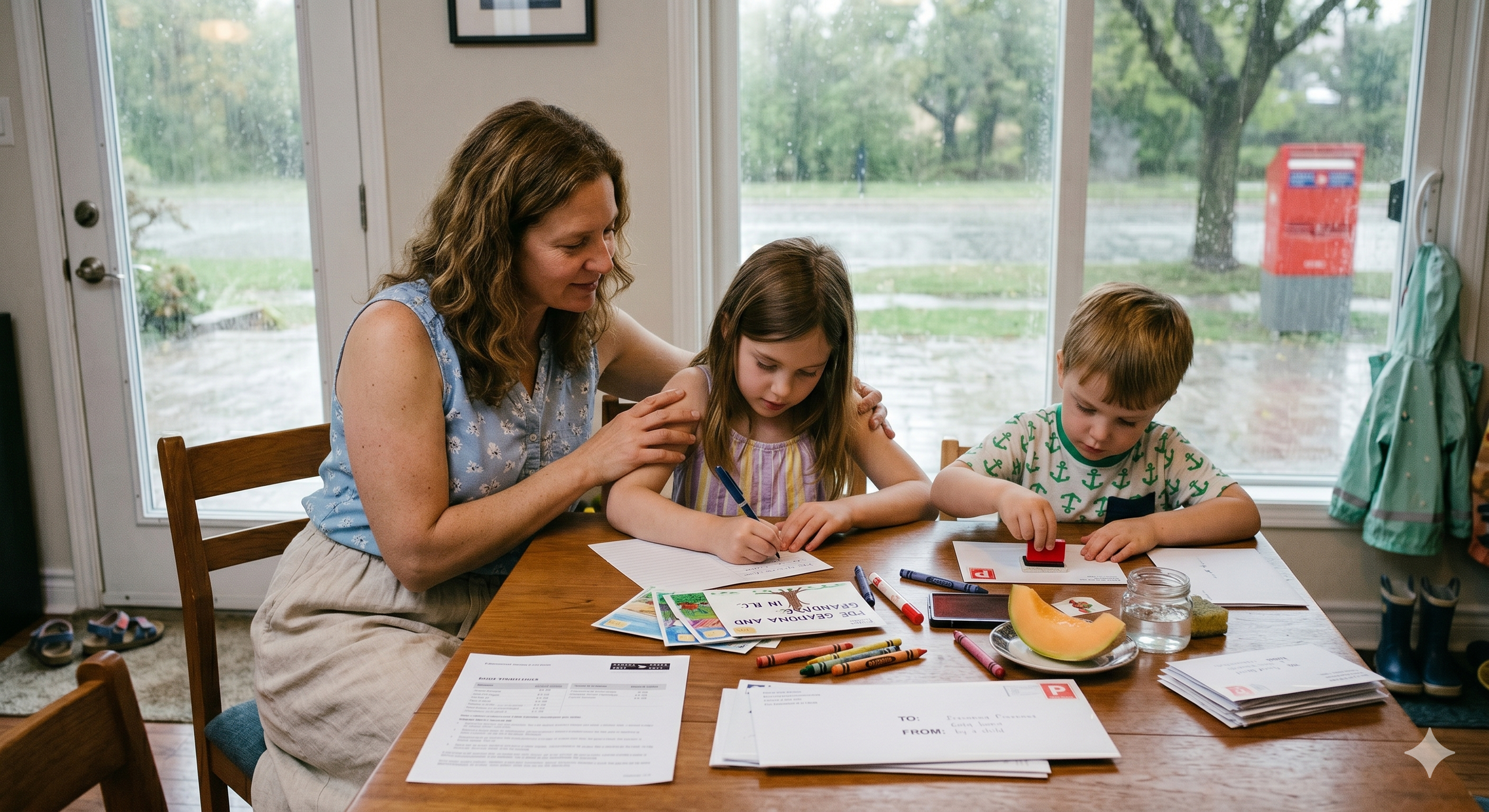
The Snail-Mail Revival: Pick a rainy afternoon for your kids to write a letter or postcard by hand to a grandparent, friend, or classmate. The process of writing by hand, finding an envelope, licking a stamp, and walking to a Canada Post box introduces a beautiful lesson in delayed gratification that a text message simply cannot replicate.
Read a Real Book: Let your children see you turning physical pages. There is a profound psychological difference for a child between seeing a parent stare at a Kindle (which looks identical to reading a work email) and seeing a parent holding a dog-eared paperback.
The Walden vision
At Walden, our mission is to nurture Good People. Good people are present people. They are individuals who can look a neighbour in the eye, who can sit with their own thoughts, and who can find wonder in the ordinary.
This summer, let’s not just send our kids outside to play while we stay inside to scroll. Let’s join them in the analog world. Let’s get our hands dirty, let’s leave the phones on the kitchen counter, and let’s rediscover the slow, unadorned joy of just being.
Have a wonderful, beautifully boring, delightfully analog summer!